

On this page
A language disorder is a persistent difficulty understanding language, using language, or both. It is not about how clearly a child pronounces words. It is about the words themselves: learning them, finding them, putting them into sentences, and following what other people say. This guide defines the main language disorders in children and gives concrete examples of each.
What is a language disorder?
Language is the system of words and rules we use to share ideas. ASHA breaks it into what words mean, how new words are formed, how words go together in sentences, and what to say in which situation. A child with a language disorder has lasting trouble with one or more of these, compared with children the same age.
Two things a language disorder is not:
- It is not a speech disorder. A child who says “wabbit” for “rabbit” has a speech sound error. A child who can say every sound but speaks in two-word phrases at age 4 has a language problem. See speech vs. language disorder. Clarity has its own benchmarks in intelligibility norms by age.
- It is not a sign of low intelligence or of learning two languages. NIDCD states that DLD is not explained by other conditions such as hearing loss or autism, and that it can affect children who speak one language or several. In a multilingual child, a true disorder shows up in every language the child speaks.
Types of language disorders
| Type | What it is | What you might notice |
|---|---|---|
| Receptive language disorder | Difficulty understanding what others say. | Doesn’t follow directions, answers a different question than the one asked, seems not to listen. |
| Expressive language disorder | Difficulty putting thoughts into words and sentences. | Small vocabulary, short sentences, grammar errors, long pauses hunting for a word. |
| Mixed receptive-expressive | Both understanding and using language are affected. | A combination of the two rows above. ASHA notes it is possible to have both. |
| Developmental language disorder (DLD) | A language disorder with no known medical cause that persists into the school years. Formerly called specific language impairment. | Late talking that doesn’t resolve, grammar errors past age 5, trouble with reading and story problems. |
| Language disorder associated with another condition | Language difficulty that comes with autism, hearing loss, Down syndrome, intellectual disability, or brain injury. | Language signs alongside the features of the other condition. |
| Social (pragmatic) communication difficulty | Trouble with the social rules of language. | Doesn’t take turns in conversation, misses jokes and hints, goes off topic. |
| Written language disorder | Difficulty with reading, spelling, or written expression. | Slow to learn letters and sounds, weak reading comprehension, disorganized writing. |
A late talker, a toddler with few words and no other diagnosis, has what clinicians call late language emergence. Some late talkers catch up. NIDCD draws the line this way: children with DLD have language difficulties that persist. For the word counts that define late talking, see how many words should my toddler know.
Language disorder examples
These are the patterns parents and teachers describe most often, grouped by the part of language involved.
| Area of language | Example |
|---|---|
| Vocabulary | A 5-year-old says “the thing you cut with” for scissors, and calls most animals “doggy.” |
| Word finding | “I want the… um… the… that one,” for words the child knows. |
| Grammar (word endings and small words) | “Him go store.” “Yesterday she walk to school.” “Two cat.” The verb endings and words like “is” and “the” are dropped well past the age peers use them. |
| Sentence structure | Sentences stay short and simple. Questions come out as “Why he is crying?” or “Where daddy go?” at an age when classmates say them correctly. |
| Understanding directions | Told “Put your shoes by the door and bring me your backpack,” the child does the first part and stops, or watches a sibling to see what to do. |
| Understanding questions | Asked “When do you eat breakfast?” the child answers “Cereal.” |
| Storytelling | Retelling a movie, the child leaves out who the characters are, jumps around in time, and you can’t follow what happened. |
| Conversation | Changes the subject abruptly, doesn’t answer what was asked, or talks at length without noticing the listener is lost. |
| Reading and writing | Reads the words on the page but can’t tell you what the paragraph said. Math word problems are harder than the math. |
Examples by age
- Toddler (18 months to 3 years): few words, no two-word combinations by age 2, limited pointing and gesturing, doesn’t follow simple directions.
- Preschool (3 to 5): short sentences, leaves out “is,” “the,” and word endings, has trouble answering who, what, and where questions, struggles to tell you about their day.
- Early school age (5 to 8): grammar errors that classmates have outgrown, trouble following classroom directions, difficulty learning letter sounds, hard-to-follow stories.
- Older children and teens: weak reading comprehension and writing, trouble with figurative language and inference, vague word choice, difficulty keeping up in group conversation.
How common are language disorders?
- 3.3%of U.S. children ages 3–17 had a language disorder lasting a week or longer in the past yearNIDCD
- 1 in 14children in kindergarten has developmental language disorderNIDCD
- 50–70%of children with DLD have at least one family member with the disorderNIDCD
Language disorders rarely travel alone. ASHA’s review of the research cites a study in which 54% of children with DLD also had dyslexia. It also cites a study of children ages 5 to 13 who had been identified with emotional and behavioral disorders, in which 81% were considered to have a language disorder. A child who “doesn’t listen” or “acts out” may be a child who doesn’t understand. We cover that overlap in online behavioral therapy for toddlers.
Causes and risk factors
For DLD, there is no single cause. NIDCD describes it as a neurodevelopmental condition that tends to run in families. Language disorders can also accompany hearing loss, autism, genetic conditions, and brain injury. Learning two languages does not cause a language disorder.
How language disorders are diagnosed and treated
A speech-language pathologist diagnoses a language disorder. According to NIDCD, the evaluation typically combines direct observation of the child, interviews and questionnaires from parents and teachers, assessment of learning ability, and standardized tests that compare the child’s language with same-age peers. A hearing test rules out hearing loss. Our guide to a pediatric therapy evaluation explains what the visit is like, and is speech therapy covered by insurance covers cost.
Treatment is speech-language therapy. For toddlers and preschoolers that looks like play, with the therapist modeling words and sentence patterns and coaching parents to do the same at home. For school-age children it targets vocabulary, grammar, comprehension, storytelling, and the language of reading and writing.
Does it go away? NIDCD is direct on this point: DLD is developmental, meaning it starts in childhood, but that does not mean children grow out of it, and its effects can last into adulthood. Early treatment during the preschool years improves the skills of many children, and older children can still benefit. For children under 3, that can start through early intervention speech therapy.
If the examples above sound familiar, compare your child with the language milestones for their age, then read how to know if your child needs speech therapy.
Frequently asked questions
What is a language disorder?
A language disorder is a persistent difficulty understanding language, using language, or both. It can affect vocabulary, grammar, sentence structure, following directions, storytelling, conversation, reading, and writing. It is different from a speech disorder, which affects how sounds are produced.
What are examples of language disorders?
Examples include receptive language disorder (trouble understanding), expressive language disorder (trouble putting thoughts into words), mixed receptive-expressive disorder, developmental language disorder (DLD), and language disorders associated with autism, hearing loss, or Down syndrome. In daily life it sounds like “Him go store” at age 4, following only the first step of a direction, or calling everything “that thing.”
What are the types of language disorders in children?
By skill: receptive (understanding), expressive (using), or mixed. By cause: developmental language disorder, which has no known medical cause, or a language disorder associated with another condition. Language disorders can also involve social communication and written language.
How common are language disorders?
According to NIDCD, 3.3% of U.S. children ages 3 to 17 had a language disorder lasting a week or longer in the past 12 months, and developmental language disorder affects approximately 1 in 14 children in kindergarten.
What is developmental language disorder (DLD)?
DLD is a communication disorder that interferes with learning, understanding, and using language and is not explained by other conditions such as hearing loss or autism. It was formerly called specific language impairment. NIDCD describes it as one of the most common developmental disorders.
Is a language disorder the same as a speech disorder?
No. A speech disorder is trouble producing sounds, speaking fluently, or using the voice. A language disorder is trouble understanding or using words and sentences. A child can have either one or both.
Is a late talker the same as a child with a language disorder?
Not necessarily. A late talker is a toddler with fewer words than expected and no other diagnosis. Some catch up. When the difficulty persists into the preschool and school years, it is diagnosed as a language disorder.
Can a child outgrow a language disorder?
Late talkers sometimes catch up, but NIDCD states that children do not simply grow out of developmental language disorder and that its impact can continue into adulthood. Therapy improves skills, and earlier is better.
Does being bilingual cause a language disorder?
No. Learning more than one language does not cause a language disorder. A child with DLD will show difficulty in all the languages they speak, not just one.
How is a language disorder treated?
With speech-language therapy from a licensed speech-language pathologist. Therapy builds vocabulary, grammar, comprehension, and conversation skills through play for young children and through structured practice tied to schoolwork for older ones, with parents coached to support it at home.
Sources
Figures in this article come from the following official and peer-reviewed sources. Last reviewed .
- NIDCD, Developmental Language Disorder
- National Institute on Deafness and Other Communication Disorders (NIDCD, NIH), Quick Statistics About Voice, Speech, Language
- ASHA Practice Portal, Spoken Language Disorders
- ASHA, What Is Speech? What Is Language?
- ASHA, Early Identification of Speech, Language, Swallowing, and Hearing Disorders
- CDC, “Learn the Signs. Act Early.” developmental milestones
This article is general information, not a diagnosis. Only an evaluation by a licensed speech-language pathologist can tell you whether your child has a speech or language disorder.
Recognize your child in these examples?
A speech-language evaluation shows which language skills are on track and which need support. Start with a free 15-minute call. No referral needed.
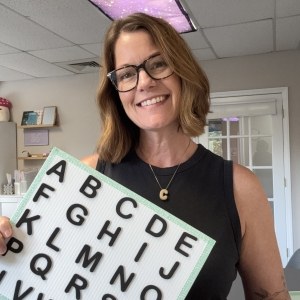
About the author
Chrissy Thompson, MA, CCC-SLP · Director of Play Talk & Grow
Chrissy holds a master's degree in Communication Disorders. Her career has focused on autistic people and children with severe motor speech disorders. She keeps her practice grounded in current research. Today she works mainly with autistic people who speak little or unreliably, using the Spelling to Communicate (S2C) method. S2C builds motor skills, regulation, and communication so people can share their real thoughts and ideas.
- Member, American Speech-Language-Hearing Association (ASHA)
- Member, North Carolina Speech-Language-Hearing Association (NCSHLA)
- North Carolina Speech-Language Pathology License
- NLA Certified Clinician
- PROMPT Trained Therapist
- DIRFloortime Trained Therapist
- Spelling to Communicate Certified Practitioner