
Toddler speech therapy in Asheville that looks like play — because it is.
If your 1-, 2- or 3-year-old isn't talking the way you expected, you don't have to wait and see. Play Talk & Grow's ASHA-certified speech-language pathologists work with late talkers and toddlers with language delays every day at our West Asheville clinic — on the floor, with toys, with you in the room. No referral needed.
- Most major insurance plans and NC Medicaid accepted
- Early intervention for toddlers under 3 — and the preschool years after
- You're in every session, with strategies to use at home that day
Wondering if your toddler needs speech therapy? Ask us — free.
Pick a time that works for you. Tell us what you're noticing and we'll tell you honestly whether an evaluation makes sense.
- 1 Choose a call time — online, about 2 minutes
- 2 Tell us what you're seeing — few words, no words, unclear speech, feeding. No referral needed
- 3 Our office confirms within one business day
Prefer to talk now? (828) 656-5188
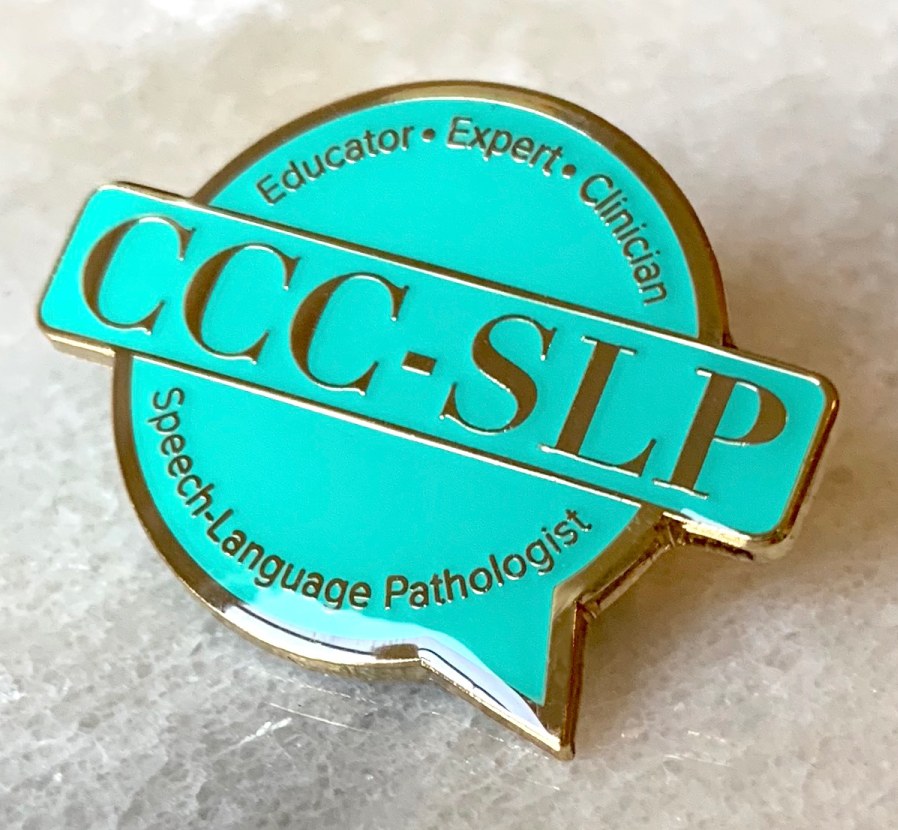
Every therapist is ASHA-certified. All of our speech-language pathologists hold the CCC-SLP, a master's degree, and a North Carolina license.


 + NC Medicaid
Is my toddler a late talker? The checkpoints, by age
These are the CDC's milestones — what most children do by each age — plus the clinical line for a late talker at 2. Missing one isn't a diagnosis. Missing one is a reason to call.
Says “mama,” “dada,” or another special name; waves bye-bye; turns when you call their name.
Tries 1 to 2 words besides “mama” and “dada.” Points to ask for something or to show you.
Says 3 or more words. Follows a simple direction without a gesture (“give me the ball”).
Puts two words together (“more milk”). Clinical benchmark: at least 50 words. Fewer than 50, or no two-word combinations, is the late-talker line.
Late-talker thresholdAbout 50 words. Uses action words. Says “I” or “me.” Short sentences start to appear.
Talks in conversation that other people mostly understand. Asks “who,” “what,” “where” questions.
Sources: CDC “Learn the Signs. Act Early.” milestone checklists and ASHA’s signs of speech and language disorders. Full chart: speech and language milestones by age · clarity by age: speech intelligibility norms.
Why “wait and see” is the one thing we don’t recommend
Only about half to two-thirds of late talkers catch up on their own — and at age 2, nobody can reliably predict which ones will. An evaluation costs you an hour. Waiting costs the months when language is easiest to build.
Looking for speech therapy for toddlers near you? We’re at 18 Regent Park Blvd, Suite A in West Asheville, about 10 minutes from downtown, with free parking out front — see directions and hours. Wondering who you’d be working with? Meet our Asheville speech pathologists.
Starting toddler speech therapy is simple
Three steps from "I've noticed something" to a clear plan — and weekly sessions your toddler will think are playtime.


Insurance doesn't have to be a hassle
We'll support you through every step of your care journey — starting with checking your benefits on the first call.

Out-of-network or private pay? We accept HSA, FSA, and NC ESA+ funds, and we'll give you what you need to submit for reimbursement. Not sure what your plan covers? Ask us on your free call.
Why Asheville families choose Play Talk & Grow
Here's what toddler sessions are like at our West Asheville clinic — and why families stick with us.
Play-based, proven methods
Kids learn best when they're having fun. Sessions follow your child's interests while targeting real clinical goals.
Neurodiversity-affirming
We meet your child where they are, honor sensory needs, and support every way they communicate — speech, signs, or AAC.
Parents as partners
You're part of every session. We coach you on simple strategies so progress keeps going between visits.
Right here in Asheville — in person
A warm, kid-friendly clinic at 18 Regent Park Blvd in West Asheville, minutes from downtown, Candler, Arden and Weaverville. Real therapists your child gets to know.
What we help with
For toddlers, these are the most common reasons Asheville families come to us — starting with the one we hear most.






What Asheville parents say
"5 stars really doesn't even begin to cover how much we appreciate this practice… the difference in individualized care and attention to child-specific needs and interests is noticeable here."
"Through his work with Ms. Chrissy, his vocabulary has grown, he is able to engage in back-and-forth conversation… We are so thankful for Ms. Chrissy and her team!"
"Mrs. Julie is so kind and patient. She truly is a neurodiversity-affirming SLP who takes the time to meet the child where they are."
"The therapists are top-notch, educated, informed… There is always a smiling face at the door and the biggest cheerleader for your kid (and you too!)."
The therapists your toddler will see
Play Talk & Grow is led by Chrissy Thompson, MA, CCC-SLP, and staffed by a team of nine speech-language pathologists — the largest pediatric speech therapist team in Asheville. Every therapist holds a master's degree, ASHA's Certificate of Clinical Competence (CCC-SLP), and a North Carolina license. Late talkers and toddlers with language delays are a core part of what we do every day.
- Licensed & certified: every therapist here is master's-level, ASHA-certified and NC-licensed
- Specialty training: PROMPT, DIRFloortime, Spelling to Communicate, LAMP, Gestalt Language Processing, feeding
- Matched to your child: we pair you with a therapist experienced in your area of need — feeding, autism, early language, and more
- Bilingual support: conversational Spanish available for bilingual families





Simple, transparent pricing
We're in-network with most major plans and NC Medicaid, and we'll walk you through your benefits on the first call. Out-of-network? We'll give you what you need to submit for reimbursement.
We also accept HSA, FSA, and NC ESA+ funds. The free 15-minute call is always free.
No surprises or hidden fees. Cancel anytime. Insurance copays vary by plan.
Not sure if your toddler needs speech therapy? That's what the free call is for.
15 minutes, no pressure, no referral needed — tell us what you're seeing and we'll tell you honestly whether an evaluation makes sense.
Toddler speech therapy in Asheville: questions parents ask
Answered by the speech-language pathologists at Play Talk & Grow.
There's no such thing as too young to ask. The CDC's milestones give checkpoints at 12, 15, 18, 24 and 30 months to measure against, and early intervention, especially before age 3, makes a real difference — the brain is building language fastest in exactly these years. If you're wondering whether your child is too young, they're probably not, and the free call is the quickest way to find out.
The clinical benchmark at 24 months is at least 50 words and some two-word combinations like “more milk” or “daddy go.” Before that, the CDC's checkpoints are modest: 1 to 2 words besides “mama” and “dada” at 15 months, and 3 or more words at 18 months. Fewer than 50 words, or no two-word combinations, at 24 months is the definition of a late talker. Our full guide: how many words should my toddler know.
At age 2, nobody can reliably tell the late bloomers from the children with a lasting delay — only about half to two-thirds of late talkers catch up on their own, and there's no way to predict which ones will. That's why “wait and see” is a gamble. An evaluation gives you a real answer: either reassurance, or a head start. Signs that tip the balance toward calling now: no words at all by 15 months, not responding to their name, losing words they used to say, frustration or tantrums that clearly come from not being able to communicate, and not pointing or waving.
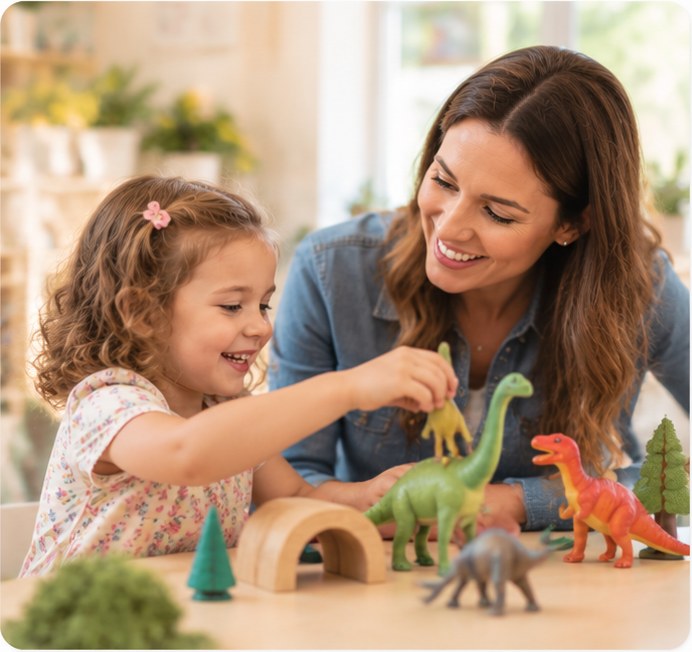
Like play, on purpose. Your toddler's therapist gets down on the floor with the toys your child already loves — bubbles, trucks, books, snacks — and builds language into every turn of the game: waiting for a word, modeling the next one, celebrating every attempt. Sessions are one-on-one and weekly, and they target real clinical goals: first words, more words, two-word phrases, understanding directions, gestures and signs, and feeding when that's part of the picture.
Yes — you're part of every session. For toddlers, parent coaching is the treatment: your therapist shows you simple strategies in the moment, and you take them home to use at mealtimes, bath time and the car ride. That's how a weekly session turns into daily progress.
It depends on your child, and anyone who promises a timeline before meeting them is guessing. Many late talkers make fast gains once sessions start and parents have strategies to use at home; children with a broader language disorder or other diagnoses may work with us longer. Your therapist sets goals at the evaluation, measures progress against them, and tells you honestly where things stand.
In North Carolina, children under 3 can be evaluated at no cost through the NC Infant-Toddler Program (Be Early). It's a good program, and many families use it. Private therapy at Play Talk & Grow needs no referral, has no age cutoff, and is covered by most insurance plans and NC Medicaid — and the two aren't either/or. Many families do both; just let each team know about the other so goals line up. More in early intervention speech therapy.
Yes. We're neurodiversity-affirming, we honor sensory needs in every session, and we support every way your toddler communicates — speech, signs, or AAC. If your child is autistic, or you suspect they might be, our total communication approach is designed for exactly that, and you don't need a diagnosis to start.
Most plans do. We're in-network with Blue Cross Blue Shield, Aetna, Cigna, UnitedHealthcare, AmeriHealth, Vaya Health, Healthy Blue, UnitedHealthcare Community Plan, and NC Medicaid, and we check your benefits on the free call. Out-of-network or private pay? We accept HSA, FSA, and NC ESA+ funds. Private-pay rates are $215 for the initial evaluation and $90 per session. Details in is speech therapy covered by insurance.
We're at 18 Regent Park Blvd, Suite A in West Asheville, about 10 minutes from downtown, with free parking out front. Families come to us from across Buncombe County — Candler, Arden, Weaverville, Black Mountain, Fletcher and Hendersonville. Directions and hours are on our find-us page.
Have a question that isn't here? Book your free call.
Yes — most plans cover speech therapy
We're in-network with these plans and NC Medicaid. Request your free call and we'll verify your benefits before you talk to a therapist.
- Out-of-network? We'll give you what you need to submit for reimbursement.
- Private pay is simple: $215 evaluation, $90 per session. HSA, FSA and NC ESA+ accepted.
Or call (828) 656-5188 and we'll check for you.